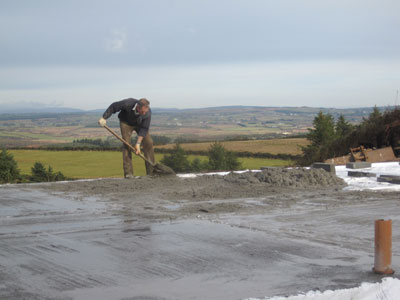
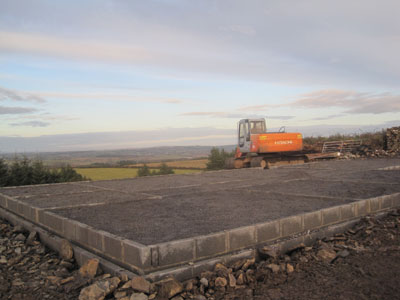
 The first time I noticed radon gas mentioned was when we put our house on the market in February. One of questions our solicitors sent us was whether we were in an area known to have high radon levels. We hadn’t a clue. Radon, apparently, occurs naturally as part of the decay chain of uranium, which the earth is full of, according to Wikipedia, and is the single largest contributor to a person’s lifetime background radiation dose. Not healthy then. Hence, where the levels of radon are higher than average, modern building regulations now require a barrier and sump to be sunk into the foundations of houses to stop the gas accumulating where it oughtn’t. And this is what we found Pat doing when we turned up today.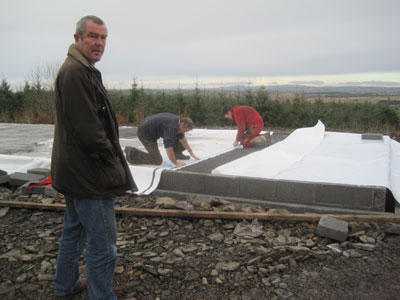
Pat is very much a ‘belt and braces’ man. Most builders will simply lay a layer of sand over the thick polythene membrane to protect it until the flooring material is laid, but Pat says this is all very well until it rains and then it is a “pure mess” – added to which, by the time the builders have trampled all over it, raked out the sand, erected scaffolding and dropped tools, the whole thing is full of holes and utterly useless. So Pat uses a weak mix concrete instead.
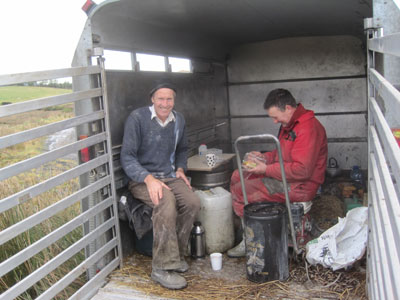 Our visit today was principally to see our neighbour, over whose land our right of way runs. In theory, we already have his permission to run water pipes down his road, but it is good to talk and we also wanted to ask his permission to level an unsightly mound on his side of the boundary. As usual, the 11.30am appointment was delayed by an hour or so, and 12.30pm also came and went with no sign of yer man. Pat and his foreman, John, repaired to the site canteen for their lunch. (As I took this photo, John said “now don’t be putting that in the Champion”.”Oh no”, I said, “just the Internet”. “Well that’s ok then.”)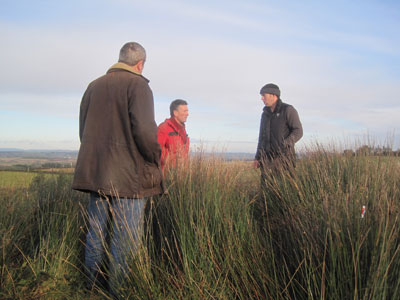
When yer man did, eventually, show up, he was helpful to a fault, allowing us to run our water pipes under a corner of his meadow rather than force us to employ a rock breaker to dig a trench in the road. Equally, he didn’t seem to mind in the least if we pushed the mound of overgrown earth over the escarpment to improve our view. We don’t know what to make of our neighbour really. He owns a lot of property all over the county, but he seems to have remarkably bad luck doing anything with it. He was particularly anxious that we shouldn’t disturb the meadow too much as he had spent a lot of money draining and re-seeding it. It didn’t seem a particularly profitable enterprise though, as it had cost 100k to do and produced just 16 bales of silage. Such is farming, perhaps. However, he had also been in trouble with the county council over a percolation bore hole that had been left uncovered and had crossed swords with the ESB over re-routing some electricity lines underground. All over the county there seem to be planning applications started and abandoned, where, in the face of an apparently minor setback, he seemed to have simply thrown in the towel and given up, often leaving himself out of pocket in the process.
 ned our new kitchen. Now when I go to the site, it is easier to visualise how the furniture and kitchen units will fit.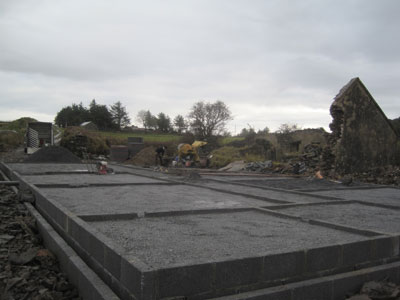
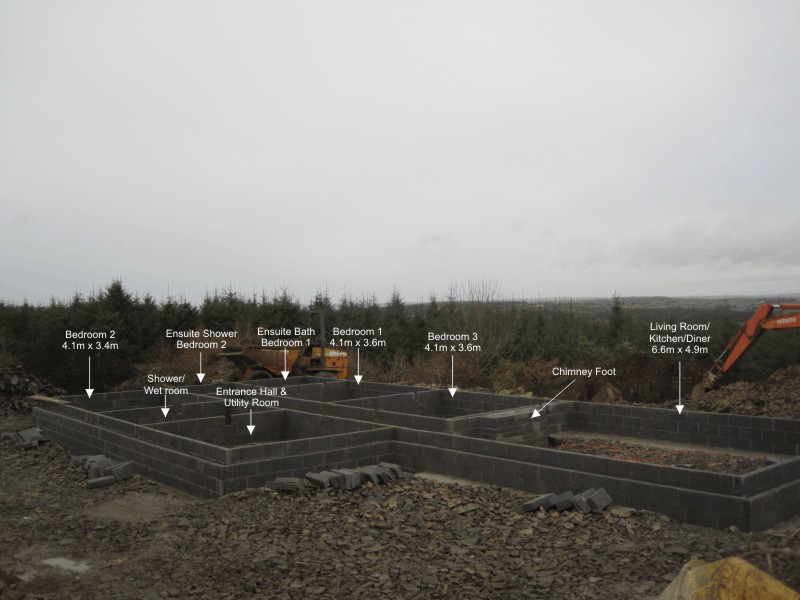
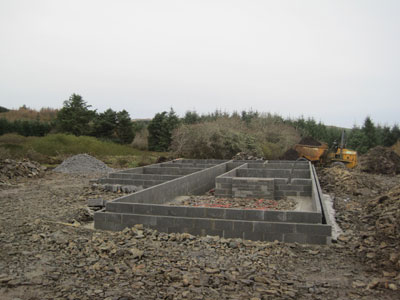 The blocks for the foundations are nearly all in place now, and you can see the room layout. It is easy to forget that all this will actually be below floor level in the finished house, so there are no apertures in the walls for doors and windows. The notches you can see in the tops of some of the block walls will carry the plumbing. Nevertheless, I hopped over the living room ‘wall’ and tried to imagine how our fully extended dining table would fit with our kitchen units and the lovely dual-fuel range that we saw yesterday at the electrical store. (I can dream …)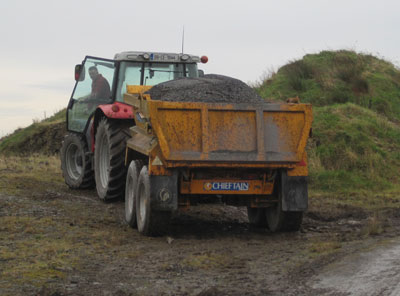
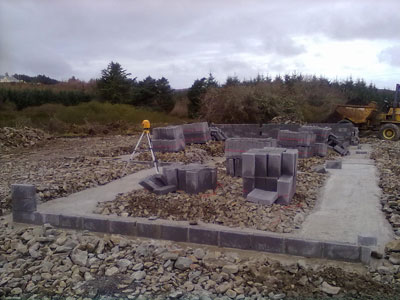 In fact, Pat’s men had turned up for work on Thursday morning, but there was little they could achieve. They laid out some corner blocks and went home. But, by mid-morning on Friday, the first layer of blocks had started to be laid around the outside walls of the new house and, at the far end, a double skin had been almost finished to floor level. We marveled at the speed of the work, until Marie explained that the men get paid per block!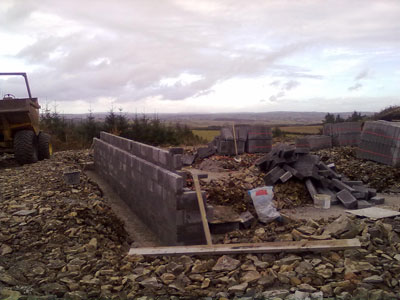
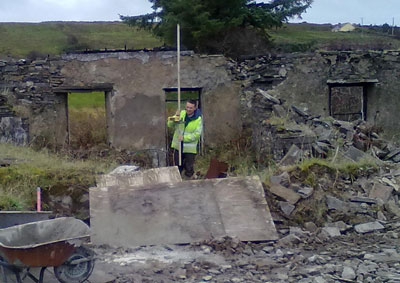
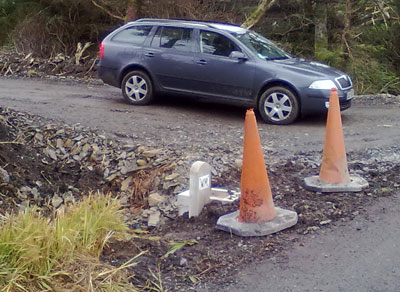
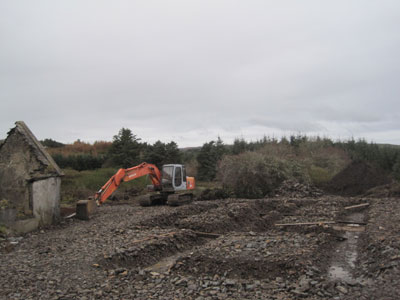 It had been raining heavily and there was no one around. However, it was evident that work was still progressing. The chicken shed had gone and the ground was dug ready for laying the foundations. We could now clearly see the outline and position of the new house. The footprint had been moved a few feet further away from the ruin, presumably to allow better access for vehicles.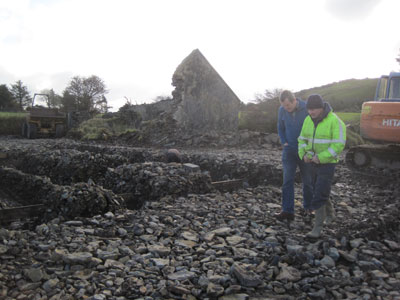
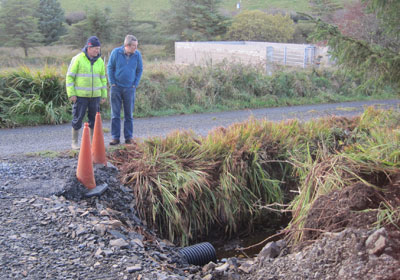 It was chilly, so we didn’t hang around and wait for the concrete. Pat needed to discuss the drainage at the road entrance. The Road Supervisor had initially asked for a pipe to be installed to allow rain water to drain freely into a ditch that runs along the perimeter of a neighbour’s field. Unfortunately, the heavy rain over the weekend demonstrated that a more sophisticated solution might be required.